The Rays Stadium Deal Isn't Signed Yet. Here's the Math Drew Park Buyers Should Run First.
August 27, 2026
August 27, 2026
Five days from now, on August 27, the Tampa City Council is scheduled to vote on the final agreements that would bring the Tampa Bay Rays to a new ballpark in Drew Park. Hillsborough County Commissioners are expected to follow with their own vote that same day or the next morning. If you've been watching the renderings of a translucent-domed stadium and a mixed-use district rise across Dale Mabry Highway from Raymond James Stadium, it's tempting to read this as the moment to get ahead of the market in West Tampa.
Before you do, it's worth understanding what actually gets voted on next week, because it isn't a finished deal and it isn't the kind of deal that pays off on a homebuyer's timeline. The financing behind this stadium has changed shape at least twice in the past four months, and the mechanism now in place tells you something the renderings don't: most of the promised value here is a bet on 2034 and 2058, not 2027.
Late Thursday night, the Council voted 4-3 just to put the Rays item on next week's agenda, contingent on the definitive documents arriving by 5 p.m. Friday. Council Members Alan Clendenin, Naya Young, Luis Viera and Bill Carlson voted yes. Lynn Hurtak, Charlie Miranda and Guido Maniscalco voted no, and that lineup is the closest public preview anyone has of how the real vote on August 27 might go. The documents did arrive on time, so the vote is on. It is not, however, the last vote. Tampa's Community Redevelopment Agency board has its own special meeting scheduled for the same day, and separate proceedings still have to work through CRA amendments and the creation of a new tax-increment financing district before any of this is fully implemented.
The same night, Council also approved a study, six votes to one, directing the Hillsborough County Planning Commission and the West Tampa Heights Neighborhood Association to spend the coming weeks working out a master plan for the surrounding stadium district: parking, transit, local business impact, and housing affordability among the items Carlson specifically asked them to address. That's a tell in itself. If the neighborhood-level planning is still being commissioned, the neighborhood-level effects are still being designed, not delivered.
The financing structure behind this stadium has already moved once in a way that matters if you're trying to guess what happens to property values near it.
The original memorandum of understanding, approved in May, called for Tampa and its Drew Park Community Redevelopment Area to cover $180 million of the public contribution, including $100 million pulled from future Drew Park CRA tax growth. The definitive documents delivered this week drop that structure entirely. The stadium site itself is being carved out of the Drew Park CRA, so property-tax growth generated inside the ballpark district will no longer count toward the CRA's tax increment at all. In its place, Tampa will advance $80 million over four years and recoup it from a brand-new Community Development District created specifically to overlay the old Hillsborough College campus. The Rays, for their part, will privately place $100 million in taxable bonds, with the debt service on those bonds paid from the tax increment inside that new CDD, not from the existing CRA that has served the wider Drew Park neighborhood since 1987.
Here's the plain version: the money isn't coming from a fund that exists today. It's coming from projected growth inside a district that hasn't been built yet.
| May MOU | August definitive documents | |
|---|---|---|
| Rays commitment | ~$1.2 billion, plus overruns | $1.37 billion (about 60% of cost), plus all overruns |
| Total public contribution | Up to $976 million | Up to $876 million |
| Tampa's share | $180 million (CIT plus Drew Park CRA) | $80 million, advanced and repaid via new CDD |
| Drew Park CRA role | $100 million pledged from future tax growth | Removed; stadium site carved out of the CRA entirely |
| County share | Up to $796 million | Up to $796 million: about $303 million from Tourist Development Tax bonds, about $360 million from Community Investment Tax revenue, plus other sources |
The Rays also agreed to pay Hillsborough County $4 million a year in rent under a non-relocation agreement that locks them into the site for an initial 35-year term, and to guarantee their own financial obligations if the project runs into trouble. That's real commitment. It just isn't the same thing as a finished neighborhood.
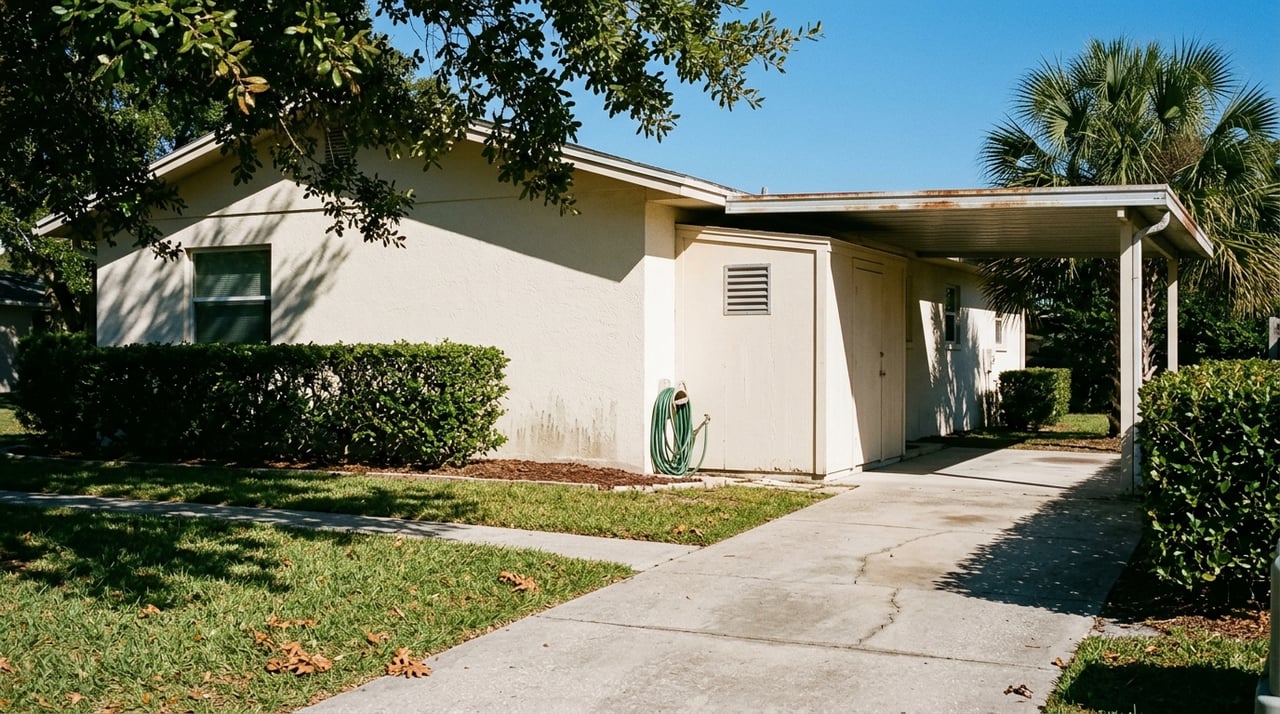
Drew Park today is bounded roughly by Hillsborough Avenue to the north, Dale Mabry Highway to the east, Tampa Bay Boulevard to the south, and the edge of Tampa International Airport to the west. It holds about 650 homes and 1,700 residents, with more than a quarter of that population below the poverty line. The zoning is mostly light industry, car dealerships, and a handful of adult entertainment businesses mixed in among the ranch homes.
It's also a neighborhood with its own small business owners already staking a claim on how the change plays out. Luigi Leon, who owns the architecture and exotic car rental firm PG Lux, has been publicly supportive of the project and its potential for new restaurants and apartments. Omar Albanil, a boxing coach who grew up in Drew Park and opened Tampa City Boxing there in 2011, has called the neighborhood an overlooked hub that development could finally connect to the rest of the city. Not everyone shares that read. Tampa resident Jaime Jones told local reporters she worries the new restaurants and retail will price out the people who already live there, and Maritza Astorquiza of the Drew Park CRA Community Advisory Committee has pushed for a seat at the table specifically because she's concerned the community's priorities will otherwise go unconsidered.
Council Chair Alan Clendenin has framed the hope for ordinary Drew Park property owners this way:
"When this development on the Hillsborough College campus happens, what we're going to look for is that percolated effect that goes throughout Drew Park."
That word, percolated, is doing real work. It means the benefit to the surrounding neighborhood isn't built into the financing structure the way the stadium's own construction is. It depends on whether growth inside the new CDD is strong enough to eventually expand what the separate, smaller Drew Park CRA can do for the blocks around it. That CRA has historically generated about $2.3 million in fiscal year 2023 and $2.8 million in fiscal year 2024. It has never issued bonds for anything close to this scale, and now the one asset that might have grown its capacity fastest, the stadium site itself, has been legally separated from it.
An economic impact analysis commissioned by the Tampa Sports Authority and prepared by AECOM, presented to Hillsborough County Commissioners in April, put real numbers on the timeline. Assessed values for the first phase of the surrounding development are projected to reach $1.4 billion by 2034. The full stadium district, if every phase of the privately financed 7.6 million square feet of offices, apartments, retail, and hotels actually gets built, is projected to reach $4.8 billion in assessed value by 2058.
Read those two dates against the construction schedule. The documents call for a groundbreaking as early as September, with site demolition beginning in December and the ballpark itself targeted to open by March 2029. That's the part of this project with a real, near-term calendar. The property value story that would actually change the math for someone buying a house in Drew Park runs on a completely different clock, one that stretches past 2034 for the first meaningful assessment milestone and doesn't fully mature until 2058.
If you're comparing Tampa neighborhoods right now, Drew Park is worth watching closely, but not because a vote next week is about to move prices. A few things are worth checking before you treat this as a growth story:
None of that means Drew Park is a bad bet. It means the honest version of this story is patience measured in years, anchored to a set of votes and planning documents that are still in motion, not a headline about a stadium that guarantees anything for a house three blocks away.
Does the August 27 vote finalize the stadium deal? No. It approves the central funding agreement between Tampa, Hillsborough County, and the Rays, but CRA amendments, the creation of the new tax-increment financing district, and other implementation measures still have to move through separate proceedings afterward.
Will current Drew Park homeowners see a tax increase because of the stadium? The stadium site itself has been carved out of the existing Drew Park CRA, so property tax growth generated inside the ballpark district funds the new CDD, not the neighborhood's redevelopment agency. Whether surrounding properties see any benefit depends on the kind of broader growth Council Chair Clendenin has called a percolated effect, which isn't guaranteed by the financing structure on the table.
If you're weighing a move to Tampa and trying to separate a genuinely emerging area from one that just has good renderings, that's exactly the kind of question worth asking before you write an offer. Kim Guillory has spent years tracking how Tampa Bay's public projects actually move property values, not just how they're pitched. Let's Get You Home.
Stay up to date on the latest real estate trends.

Get assistance in determining current property value, crafting a competitive offer, writing and negotiating a contract, and much more. Contact me today.