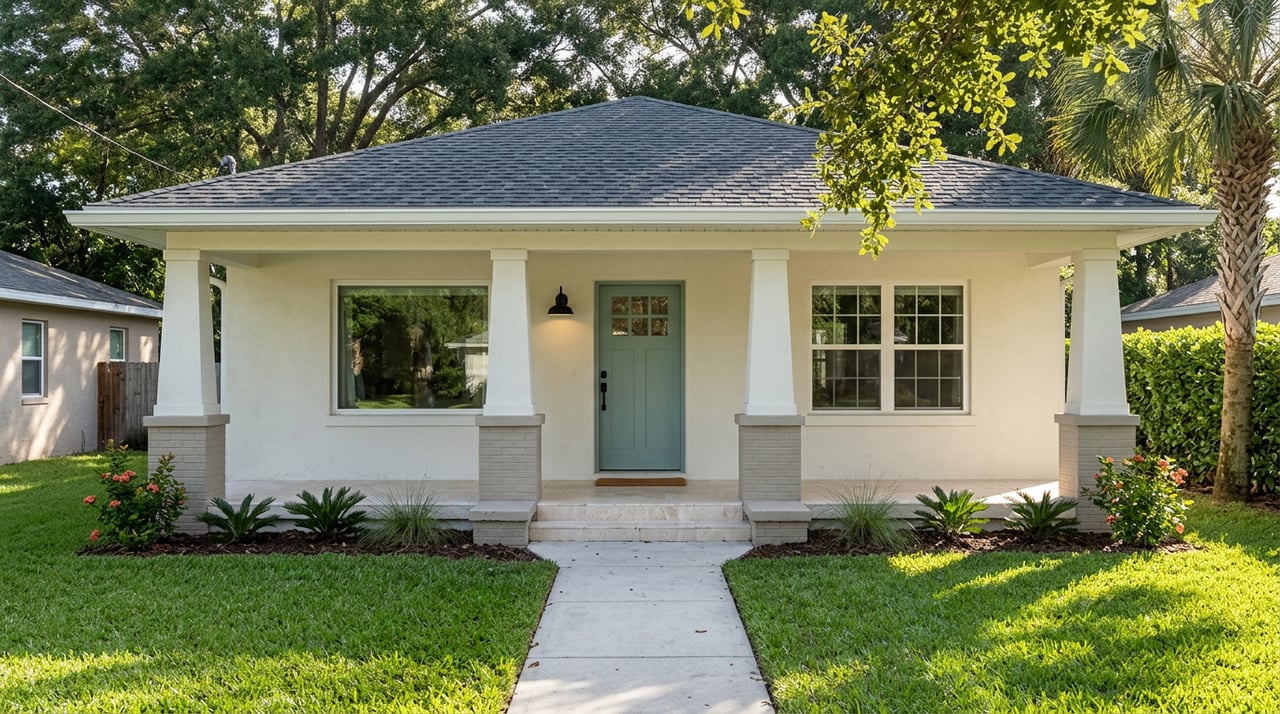
Tampa Buyer Negotiation in Summer 2026: Where You Have Room
July 9, 2026
July 9, 2026
If you have been watching Tampa on the portals this spring, the story looks boring. Median sale price in the city was $443,000 over the three months ending May 2026, down about 1.4% from the same window a year ago, according to Redfin. Homes went to contract in roughly 41 days, up from 36 last year. Inventory is comfortable at around 3.6 months of supply for single-family homes, per Truvera Title's June 2026 Tampa update.
Read that at face value and you would assume Tampa sellers are holding the line. They are not. The negotiation has simply moved off the sticker and onto the closing statement, and if you are shopping this summer, that is the number that actually matters.
Here is the mechanism. A seller who bought in 2021 or 2022 is anchored to a net-proceeds figure. Cutting the list price by $10,000 shows up in every comp for the next twelve months and lowers what the neighbor down the street can ask for next year. Handing the buyer a $10,000 credit at closing does neither. So sellers are quietly steering the discount into concessions: rate buydowns, closing-cost credits, repair credits, insurance offsets for storm-resiliency work flagged during inspection.
That shift is not theoretical. Local brokerage reporting from early 2026 called the 2-1 mortgage rate buydown the single most effective seller strategy in the current Tampa Bay market, and buyer-side write-ups through the spring describe the same list of concessions surfacing on nearly every offer: buydowns, closing-cost assistance, insurance and repair credits.
Tampa, mid-2026 at a glance:
- Median sale price: about $443K (Redfin, 3 months ending May 2026)
- Days on market: 41, up from 36 a year ago
- Tampa Bay single-family supply: ~3.9 months (Florida Realtors, early June 2026)
- Active Tampa Bay listings: ~17,400 as of late February 2026
- Prevailing 30-year fixed: 6.25%–6.75% range through spring 2026
The reason this matters for the buyer is arithmetic. With a rate in the mid-6s, a seller-funded buydown moves the monthly payment by more per dollar spent than an equivalent price cut would. A $395,000 home listed with an $8,000 rate-buydown concession often nets the seller the same as a $399,000 home that sits sixty days and eventually gets talked down further. Both sides can walk away happier than the median implies. That is the trade neither the Zillow estimate nor the days-on-market chart shows you.
Tampa is not one market. The concession posture shifts sharply depending on where you are shopping, and the median number papers over that. Here is how the negotiation actually looks across three tiers this summer.
| Tier | Representative pockets | Where the give is |
|---|---|---|
| Premium in-town | Hyde Park, Palma Ceia, Bayshore Beautiful, Davis Islands | Small concessions, shorter days on market, sellers hold near list; leverage lives in inspection-triggered credits, not price |
| Mid-tier walkable | Seminole Heights, Westshore, Westchase | Sellers most anchored on price but most willing to fund buydowns and closing costs; concession stacking is common |
| Suburban resale | Riverview, Brandon, Valrico | Competing head-on with builder incentives at Watergrass, Epperson, Connerton; sellers matching builder-style packages or losing the deal |
The premium in-town pockets are still moving. South Tampa continues to command a premium, and homes in Hyde Park, Palma Ceia, and Bayshore Beautiful walk to a lifestyle that suburban inventory cannot copy. If you are shopping there, do not expect a headline discount. Do expect a seller who will meet you on inspection items, particularly older roofs, aging HVAC, and any storm-related repair a lender or insurer will flag.
The mid-tier is where the concession game is loudest. In a Seminole Heights bungalow or a Westshore townhome, the seller often bought at or near the peak, and cutting list price feels like losing. Structuring the same dollars as a 2-1 buydown or a closing-cost credit lets them protect the recorded sale price while still moving the home. If you are a buyer who plans to be in the house five or more years and expects to refinance if rates ease, the buydown is the concession worth pushing hardest for.
The suburban resale story is different again. Riverview, Brandon, and Valrico sellers are not just competing with one another. They are competing with new-construction communities like Watergrass, Epperson, and Connerton, where the builder is offering its own rate buydowns, closing-cost help, and sometimes free upgrades. A resale seller in Riverview cannot ignore that. If you are comparing a five-year-old home in Riverview to a new build twenty minutes north, the resale seller has to match the incentive stack or accept a longer sit on market. That is your opening.
The place the 2026 Tampa transaction most often stalls is not price. It is the inspection report and the insurance quote that follows it.
Buyers who came through the 2021 and 2022 market waived inspections. Buyers this summer do not, and they should not. What is coming back on Tampa inspection reports right now, and what carriers are asking about before they will bind, has shifted the standard closing checklist. Expect scrutiny on roof age, four-point inspection results, wind-mitigation credits, water-heater and HVAC age, and any deferred maintenance a hurricane season could turn expensive. On homes built before roughly 2002, wind-mitigation features and roof shape can swing the annual premium by four figures. That number is worth more to your monthly cost than a $5,000 price cut in most cases.
The practical read for a buyer: when you write your offer, do not spend all your negotiating capital on the list price. Reserve room for a post-inspection ask, and know in advance which structure you want. If your priority is monthly payment, push for the rate buydown. If your priority is out-of-pocket at closing, push for closing costs. If the inspection surfaces a roof or a panel that will haunt the insurance renewal, push for a repair credit tied to a specific licensed-contractor bid, not a vague dollar figure.
Sellers who list at 2022 prices are still sitting. Sellers who priced to spring 2026 comps and left a small cushion for concession structuring are closing. That is the pattern showing up in the current data, and it is a pattern a well-prepared buyer can use.
Condos and single-family are behaving differently. Condo supply in the Tampa Bay region is running closer to 5.6 months, softer than single-family, and Florida's reserve-funding rules have pushed HOA dues and special assessments higher on older buildings. If you are pricing a condo against a single-family in the same corridor, do not compare list prices without pulling the current HOA budget, reserve study status, and any pending assessment. That paperwork is where the real cost lives.
New-construction incentives are still moving faster than resale. National builders in Pasco and east Hillsborough have kept rate buydowns and closing help on the table well into 2026, and they are using in-house lenders to deliver rates that look better than what a resale buyer sees quoted retail. If you are cross-shopping a resale in Riverview or Brandon against a new build in the same corridor, price the total monthly payment side by side, not the sticker. The builder's package can close a gap that looks large on Zillow.
If the median is only down about 1.4%, is Tampa really a buyer's market? It is more balanced than the headline number reads. Inventory has roughly doubled off the pandemic lows, days on market are longer, and concessions are now expected on most single-family transactions. The leverage is real. It just shows up on page two of the closing statement rather than in the sale price.
Is a rate buydown better than a price cut? It depends on how long you plan to hold and whether rates ease. For a buyer keeping the home five or more years with any intent to refinance, a buydown often stretches further per dollar than the equivalent cut. For a buyer expecting to sell within two or three years, a price cut and its lower principal balance can be the stronger move. This is a conversation for you, your lender, and your agent together, not a blanket rule.
Where should a first look focus this summer? If walkability and character matter most, mid-tier pockets like Seminole Heights and Westshore are where the concession game is most active right now. If a specific school pattern or suburban footprint matters, resale in Riverview, Brandon, and Valrico is where sellers are most flexible because they are competing with new construction next door.
What should I ask a seller's agent before writing? Two questions. How long has the home been on the market at its current price, and would the seller entertain a concession structured as a rate buydown or closing-cost credit rather than a price reduction? The answers tell you almost everything about the room you actually have to work with.
The portals will keep telling you the median. What they cannot tell you is which Seminole Heights seller is ready to fund a buydown, which Riverview listing is losing sleep over the builder down the road, or which South Tampa inspection is about to open a five-figure conversation. That is the work I do for clients every week. If you are planning a Tampa purchase this summer and want a hospitality-first agent walking the numbers with you before you write, Kim Guillory would love to help. Let's get you home.
Stay up to date on the latest real estate trends.

Get assistance in determining current property value, crafting a competitive offer, writing and negotiating a contract, and much more. Contact me today.