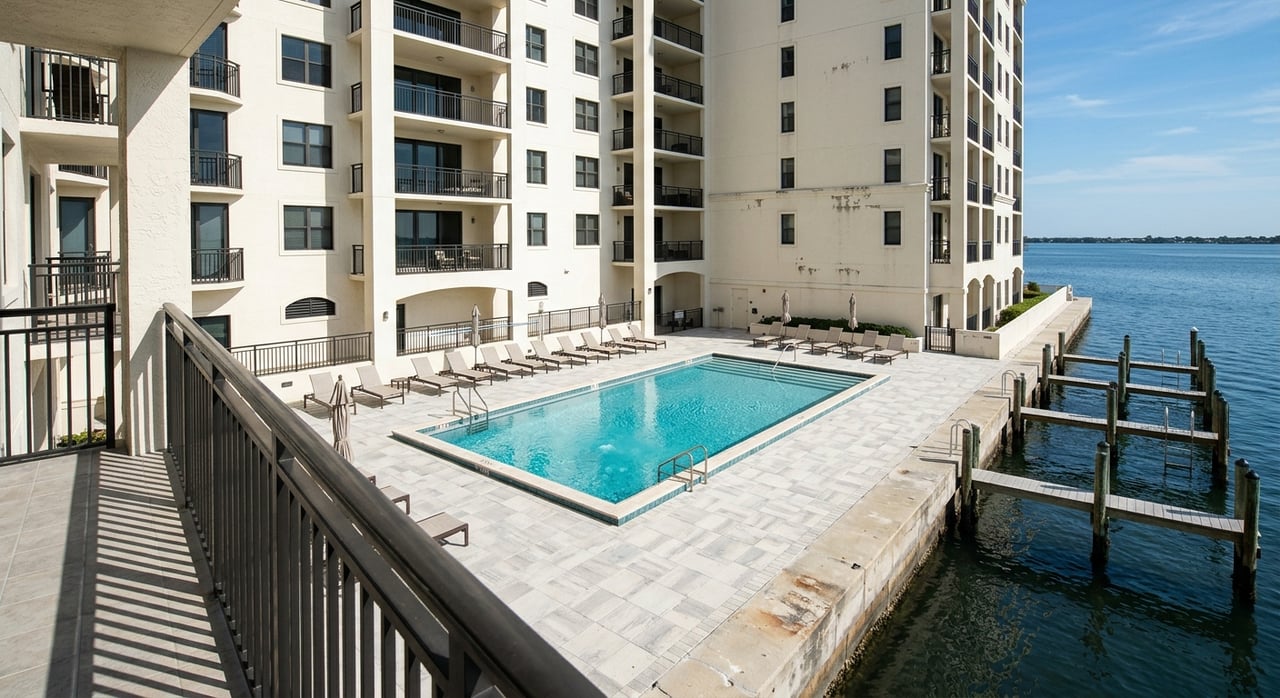
What Buyers Should Know About St Petersburg Waterfront Condos
May 14, 2026
May 14, 2026
Dreaming about waking up to open water views in St. Petersburg? A waterfront condo can be a beautiful lifestyle move, but in Pinellas County, buying the right one means looking far beyond the balcony. You need to understand the building, the condo association, and the property’s coastal risk before you make an offer. This guide will walk you through what to review so you can buy with more clarity and confidence. Let’s dive in.
In St. Petersburg, flood exposure is not a side note. Pinellas County has 590 miles of highly developed coastline, and the county expects sea-level rise, storm surge, and tidal flooding to increase over time. That makes flood review a core part of buying any waterfront condo.
A common mistake is assuming the word waterfront tells you everything you need to know. It does not. The better question is what the building’s actual flood profile looks like at that exact address.
Before you move forward, review the FEMA flood zone, Pinellas County floodplain maps, storm-surge maps, and the evacuation zone for the building. Pinellas County notes that FEMA Flood Insurance Rate Maps help determine building and flood insurance requirements, while county flood maps are also useful for local planning.
It is also important to remember that flood damage can happen anywhere in Pinellas County, not only right on the water. A condo with a great location still needs a location-specific flood review.
If a building is in a Special Flood Hazard Area, mandatory flood insurance rules can apply when there is a federally backed mortgage. Pinellas County also explains that flood premiums can depend on details such as elevation, foundation type, replacement cost, construction date, and construction features.
An elevation certificate can make a meaningful difference in rating. If you are considering a waterfront condo, ask early whether one is available and how it affects current insurance costs.
With waterfront condos, the association paperwork matters just as much as the view. Florida gives resale buyers access to a substantial disclosure package, and those documents can reveal a lot about the building’s financial health, maintenance planning, and repair outlook.
For a resale unit, the seller must provide documents such as the declaration, articles of incorporation, bylaws and rules, annual financial statement and budget, and FAQs. If applicable, the package must also include the current milestone inspection summary, the latest structural integrity reserve study, and any required turnover inspection report.
After receiving the required resale documents, you generally have a 7-day cancellation window. Developer sales carry a longer 15-day period. If a required milestone inspection or reserve study has not been completed, contracts entered after December 31, 2024 must disclose that fact.
That review period is valuable. Use it to slow down, read carefully, and ask questions before you remove contingencies or move deeper into the transaction.
Reserve strength matters because assessments are tied to common expenses. Under Florida law, an assessment is the unit owner’s share of common expenses, and owners remain liable for assessments that come due while they own the unit.
For you as a buyer, that means the monthly dues are only part of the picture. You should also look for signs of reserve shortfalls, planned capital projects, deferred maintenance, and any pending or likely special assessments.
Florida law treats association records as a major part of condo due diligence. Official records include items like inspection reports and building permits, and many records must be kept for years. Inspection reports must be retained for 15 years.
If you are serious about a unit, ask for clarity on recent repairs, open projects, and the building’s maintenance history. On a waterfront property, those details can have a direct impact on future costs and peace of mind.
Older waterfront buildings deserve extra scrutiny. Florida’s newer condo safety rules make building condition a key part of the buying decision, especially for condos that are three habitable stories or higher.
A structural integrity reserve study must be completed at least every 10 years for covered buildings. The study addresses major components such as the roof, structure, fireproofing, plumbing, electrical systems, waterproofing and exterior painting, windows and exterior doors, plus certain other deferred-maintenance items.
Milestone inspections are also required for certain buildings by the year the building reaches 30 years of age. In some coastal or salt-water situations, the first inspection can be triggered at 25 years.
When you are evaluating a condo, ask these questions early:
These questions can help you understand whether you are buying into a well-maintained building or stepping into avoidable financial surprises.
Insurance for a St. Petersburg waterfront condo is usually more complex than insurance for a single-family home. In many cases, there are two layers of coverage: the association’s master policy and your individual HO-6 policy.
The association is generally required to use best efforts to insure association property, common elements, and the condo property it must cover. As a unit owner, you typically need an HO-6 policy for personal property, liability, and certain interior building items.
Florida consumer guidance explains that the association’s master policy does not cover everything inside your unit. Items such as personal property, floor, wall, and ceiling coverings, electrical fixtures, appliances, water heaters, built-in cabinets, countertops, and window treatments may fall outside the association’s coverage.
That is why it is important to ask what the master policy covers and where your responsibility begins. You want your insurance plan to match the actual ownership structure.
Flood insurance is usually separate from condo or homeowners coverage. Florida guidance states that flood coverage is typically purchased as a separate policy or endorsement, and while Florida law does not require homeowners to carry flood insurance, lenders may require it in certain situations.
Hurricane deductibles also deserve a close look. The Florida CFO notes that condo association policies may use either an annual hurricane deductible or a separate deductible for each hurricane. That deductible structure can affect your real carrying costs just as much as dues and taxes.
Florida requires HO-6 policies to include at least $2,000 in loss-assessment coverage, with a deductible no greater than $250. Still, coverage has limits, and waterfront buyers should understand them.
For example, Florida’s condo consumer guidance explains that an HO-6 loss-assessment claim will not respond if the underlying peril is not covered by the policy. If a seawall or similar waterfront feature is damaged by rising water or waves and flood is excluded, that assessment may not be covered by the unit-owner policy.
One of the biggest lifestyle draws in St. Petersburg is access to the water. But if a building offers docks, boat slips, seawalls, storage, or other waterfront features, you should treat those as legal and financial questions, not just lifestyle perks.
Florida condo law allows some common elements to be reserved for certain units as limited common elements. That is why a slip, dock, balcony, storage area, or parking space can work very differently from one building to another.
Do not assume a boat slip is included just because the listing mentions one. Ask whether the slip is deeded, assigned, leased, waitlisted, or available only by association policy.
You should also confirm who maintains it and who pays for upkeep. The declaration may place those responsibilities on the association, specific unit owners, or the users of the limited common element.
Waterfront structures can also involve state lands and permits. The Florida Department of Environmental Protection explains that sovereignty submerged lands include tidal lands and lands waterward of the ordinary or mean high-water line, and that submerged-land leases, easements, renewals, modifications, and assignments may be required.
Dredging, filling, dock pilings, seawalls, and related work can also be regulated. For you as a buyer, that means it is smart to ask whether waterfront structures have current permits, clear maintenance plans, and proper legal authorization.
If you want a practical way to narrow down your due diligence, start here:
Buying a waterfront condo should feel exciting, not uncertain. When you take time to review the building, the association, and the coastal risk together, you give yourself a much stronger foundation for a smart decision.
If you are exploring waterfront condos in St. Petersburg and want a hands-on guide through the details, Kim Guillory offers the kind of warm, thoughtful support that helps you move forward with confidence.
Stay up to date on the latest real estate trends.

Get assistance in determining current property value, crafting a competitive offer, writing and negotiating a contract, and much more. Contact me today.